High Performance Display Glass from Tinted Glass Manufacturers
High-performance display glass serves as the critical interface between electronic circuitry and the end-user, demanding a precise balance of optical clarity and mechanical resilience. In an era where visual fidelity defines product quality, these specialized substrates must achieve light transmittance exceeding 90% while maintaining a structural profile that ranges from ultra-thin flexible sheets to rigid panels. For engineers and procurement specialists, selecting the right substrate involves navigating complex trade-offs between thickness, touch sensitivity, and surface durability.
Whether integrated into a foldable smartphone, a surgical monitor, or an automotive head-up display, the performance of the glass directly impacts the device's longevity and user experience. By utilizing advanced surface treatments such as anti-reflective and anti-fingerprint coatings, manufacturers can mitigate environmental interference and enhance visual contrast. This guide explores the technical specifications and application logic required to implement display glass in high-demand commercial and industrial environments.

Fundamental Technical Characteristics of Modern Display Glass Substrates
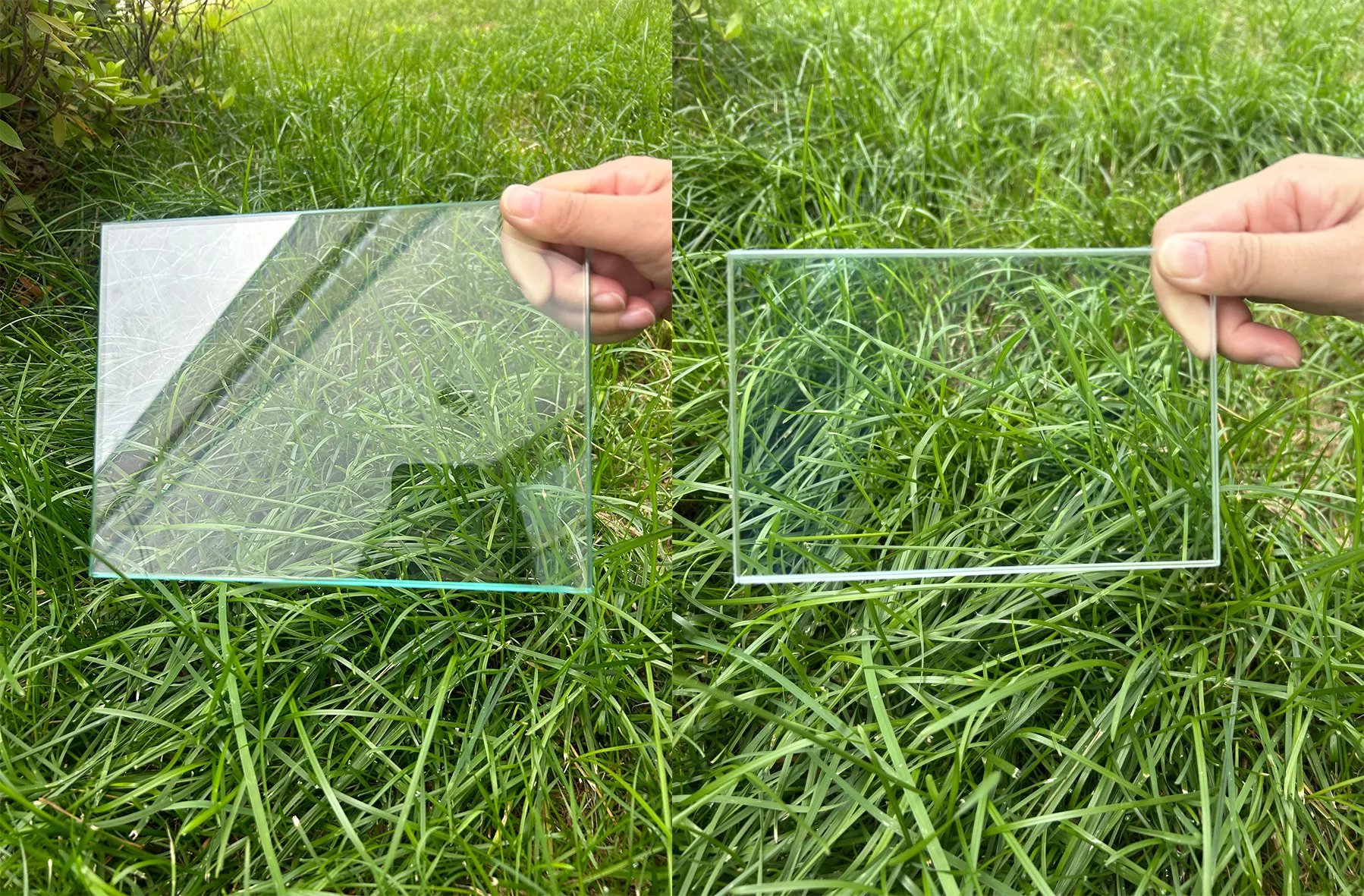
Display glass is engineered to act as a protective and functional layer that does not compromise the light output of the underlying panel. The primary objective is High Optical Clarity; by ensuring transmittance levels above 90%, the glass minimizes light loss and prevents chromatic aberration, which is essential for 4K and 8K resolution displays. This transparency is achieved through stringent purity controls during the melting and forming process to eliminate microscopic inclusions.
Beyond clarity, the structural versatility of these substrates is a defining feature. The industry utilizes a wide spectrum of thicknesses to meet diverse form factors:
- Flexible Glass (approx. 0.1mm): Designed for the next generation of foldable devices and curved interfaces.
- Rigid Panels (up to 3mm): Used in industrial control panels and large-format signage where impact resistance is prioritized.
Furthermore, the integration of surface functionalization is critical. The application of Indium Tin Oxide (ITO) layers enables the glass to become conductive, facilitating touch-sensitive interfaces without sacrificing transparency. When combined with anti-reflective (AR) coatings, the glass can significantly reduce glare, making it suitable for high-ambient-light environments like automotive dashboards or outdoor kiosks.

Strategic Application Scenarios Across Consumer and Industrial Sectors
The deployment of display glass varies significantly based on the operational stresses of the target environment. In Consumer Electronics, the focus is on scratch resistance and tactile response. Smartphones and tablets require glass that can withstand thousands of touch cycles and daily abrasions while remaining thin enough to maintain a sleek device profile. High-end TVs and monitors prioritize the removal of reflections to ensure that high-dynamic-range (HDR) content is rendered accurately.
In the Automotive and Transportation sector, the requirements shift toward safety and visibility. In-vehicle displays, including dashboard screens and Head-Up Displays (HUD), utilize anti-glare glass to prevent driver distraction. Public transport interfaces, such as airport information panels, often employ ruggedized glass that can resist heavy impacts and continuous public use.
The Industrial and Medical fields demand the highest levels of reliability. For factory automation, control panels must be dust-proof and moisture-proof to operate in harsh environments. In medical settings, the glass must be compatible with rigorous sterilization protocols and chemical cleaners, ensuring that surgical monitors and diagnostic tablets remain sterile without degrading the glass surface or the anti-fingerprint coatings.
Engineering Considerations for Material Selection and Integration
When specifying display glass, engineers must evaluate the interaction between the glass substrate and the display technology (LCD vs. OLED). For OLED screens, the glass often needs to be thinner to facilitate flexibility. For LCDs, the focus remains on the refractive index to optimize light transmission. A common challenge is the management of thermal expansion; the glass must be matched to the bezel and adhesive materials to prevent cracking during temperature fluctuations, especially in automotive applications.
Surface treatment selection is equally pivotal. An Anti-Fingerprint (AF) coating is essential for any touch-enabled device to maintain visual clarity and ease of cleaning. However, in medical or industrial contexts, an Anti-Reflective (AR) coating is often prioritized to ensure that critical data is readable under intense overhead lighting. The durability of these coatings is measured by their hardness and adhesion strength, which determines the maintenance cycle of the end product.
Procurement teams should also consider the balance between rigidity and weight. While thicker glass provides superior impact protection for digital signage and kiosks, it increases the overall weight of the assembly and can complicate the mounting process. This necessitates a precise calculation of the required thickness based on the expected mechanical load and the environmental risks of the installation site.
Display Glass Specification and Application Matrix
| Glass Type | Typical Thickness | Primary Feature | Recommended Application |
|---|---|---|---|
| Flexible Substrate | 0.1mm - 0.5mm | High Bendability | Foldable Smartphones |
| Ultra-Thin Rigid | 0.5mm - 1.1mm | High Transparency | Tablets & OLED TVs |
| Standard Rigid | 1.1mm - 3.0mm | Impact Resistance | Industrial Control Panels |
| Coated Specialized | Application-dependent | Anti-Glare / ITO | Automotive HUDs |
| Ruggedized Glass | 2.0mm - 3.0mm | High Durability | Public Information Kiosks |
Evaluating Supplier Capabilities for Specialized Glass Procurement
Selecting a partner among various glass manufacturers requires a deep dive into their quality management systems and R&D depth. A reliable supplier must demonstrate a comprehensive industrial chain, from raw float glass production to advanced deep processing. This vertical integration ensures better control over the purity of the glass and the consistency of the surface coatings, which is critical for large-scale production runs where variance can lead to significant yield loss.
Certification is a non-negotiable factor for high-stakes industries. Suppliers holding ISO9001 for quality management and environmental certifications ensure that the production process is stable and sustainable. For architectural or high-end commercial projects, certifications like the German PHI or FSC international forest certification (for integrated frames) provide an added layer of trust regarding the ecological footprint and safety standards of the materials used.
Furthermore, the ability to provide one-stop procurement—integrating raw glass, tempered or laminated processing, and customized coatings—significantly reduces the supply chain complexity for the buyer. This reduces the risk of compatibility issues between the substrate and the finish, while shortening delivery lead times and reducing overall logistics costs.
Future Trends in Visual Interface Technology and Glass Innovation
The trajectory of display glass is moving toward "invisible" integration and enhanced intelligence. We are seeing a shift toward the widespread adoption of ultra-thin, flexible glass that enables seamless transitions between rigid and curved surfaces. This innovation is not limited to consumer electronics but is extending into automotive interiors, where wrap-around displays are becoming a standard for immersive driver experiences.
Another significant trend is the development of "smart" glass layers that can change opacity or filter specific wavelengths of light based on electronic triggers. This allows for dynamic adjustment of the user interface based on ambient lighting conditions, further improving energy efficiency and visual comfort. The integration of biosensors directly into the glass substrate is also an emerging area, promising touch-free interfaces for medical and sterile environments.
Sustainability is also reshaping the industry. The movement toward carbon neutrality is driving manufacturers to adopt green development models, focusing on reducing the energy intensity of the glass melting process and implementing closed-loop recycling for glass cullet. For the procurement manager, this means the "green" certification of a supplier is becoming as important as the technical specification of the glass itself.
Technical FAQ: Understanding Display Glass Requirements
What is the difference between anti-reflective (AR) and anti-glare (AG) coatings?
AR coatings use destructive interference to reduce the amount of light reflected off the surface, increasing transparency and contrast. AG coatings create a microscopic surface roughness that scatters reflected light, diffusing glare and making the screen easier to read under direct light sources.
How does glass thickness affect the touch sensitivity of a display?
Generally, thinner glass allows for a shorter distance between the finger and the sensor layer, which can improve the responsiveness and sensitivity of capacitive touchscreens. However, there is a trade-off with mechanical strength, which is why chemically strengthened glass is used to maintain durability at low thicknesses.
Can display glass be customized for extreme temperatures?
Yes, by using borosilicate glass or specialized tempering processes, display glass can be engineered to withstand extreme thermal shock and operate in wide temperature ranges, which is critical for industrial and aerospace applications.
What is the role of ITO in display glass?
Indium Tin Oxide (ITO) is a transparent conducting oxide. When applied as a thin film to the glass, it allows the surface to conduct electricity, enabling the device to detect the electrical charge of a human finger for touch-screen functionality.
eWhich certifications should I look for when choosing a glass supplier?
At a minimum, look for ISO9001 (Quality Management). For specific applications, check for safety certifications (like CCC or KCPC), environmental standards (ISO14001), and if applicable, industry-specific certifications like PHI for high-end architectural glass.
What is the typical lifespan of an anti-fingerprint (AF) coating?
The lifespan varies depending on the usage intensity and cleaning agents used. High-quality vacuum-deposited coatings last significantly longer than spray-on coatings, but all AF layers eventually wear down through mechanical friction and chemical exposure.
Technical References and Industry Standards
- ISO Standards for Glass Quality Management
- The Glass Association - Technical Resources
- NIST Optical Material Specifications
- ASTM International Glass Testing Standards
Selecting the optimal display glass requires a strategic alignment between technical specifications and the intended operational environment. For those seeking a reliable partner, collaborating with experienced manufacturers who offer a full chain of production—from float glass to precision coating—is the most effective way to ensure product longevity and visual performance.
Related Industry Insights