Horticultural float glass is rapidly becoming a crucial component in modern agriculture and greenhouse technology. Its unique properties – clarity, light transmission, and durability – are driving its adoption worldwide, impacting food production, research, and botanical gardens alike. Understanding its manufacturing process, applications, and future potential is paramount for professionals and enthusiasts in the horticultural sector.
The global demand for controlled-environment agriculture is escalating due to climate change, increasing populations, and a need for year-round crop production. Horticultural float glass, with its ability to optimize light spectrums and maintain stable temperatures within greenhouses, directly addresses these challenges. Data from the UN Food and Agriculture Organization (FAO) indicates a growing investment in protected cultivation systems, positioning horticultural float glass as a key enabler of sustainable agriculture.
Furthermore, the versatility of horticultural float glass extends beyond traditional greenhouses. It is increasingly utilized in vertical farms, plant research facilities, and even residential conservatories, showcasing its adaptability and economic viability. Its application isn’t merely about shelter; it’s about creating optimal growing conditions, leading to higher yields, improved quality, and reduced resource consumption.
Introduction to Horticultural Float Glass
Horticultural float glass represents a significant advancement in greenhouse and controlled-environment agriculture. Unlike standard glass, it's engineered specifically to meet the unique demands of plant growth, maximizing light transmission within crucial spectral ranges while providing excellent thermal insulation. This tailored performance leads to healthier plants and increased yields.
Its increasing prominence is driven by the need for sustainable food production methods. As land and water resources become more limited, maximizing output from existing agricultural spaces is critical. horticultural float glass offers a powerful solution, allowing growers to extend growing seasons, reduce pesticide use, and optimize resource efficiency.
Defining Horticultural Float Glass
Horticultural float glass is a type of glass specifically designed for use in greenhouses, plant nurseries, botanical gardens, and other horticultural applications. It is produced through the float glass process, where molten glass is floated on a bed of molten tin, resulting in a perfectly flat and uniform surface. However, what sets horticultural float glass apart is the addition of specialized coatings and modifications to optimize its properties for plant growth.
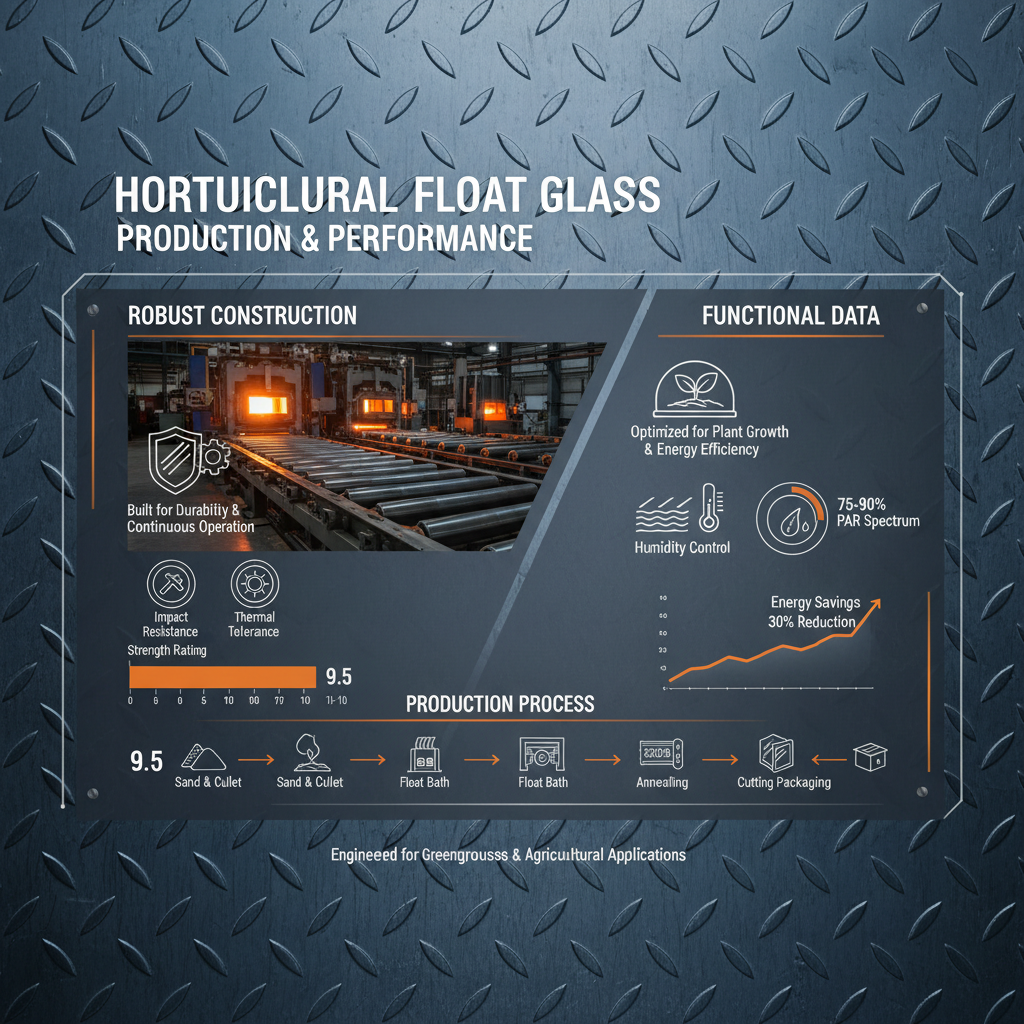
These modifications often include selective light transmission, meaning the glass allows wavelengths of light most beneficial to photosynthesis to pass through while filtering out harmful UV radiation. Its high clarity ensures maximum light penetration, even on cloudy days. Moreover, its thermal properties help maintain stable temperatures within the growing environment, reducing heating and cooling costs.
The production of horticultural float glass aligns with the modern need for increased food security and sustainable agricultural practices. It provides a technologically advanced solution for optimizing plant growth, irrespective of external environmental conditions.
Core Properties of Horticultural Float Glass
The defining characteristics of horticultural float glass are centered around its ability to create an optimal growing environment. Firstly, its high light transmission, particularly in the PAR (Photosynthetically Active Radiation) spectrum, is essential for photosynthesis. This directly impacts plant growth rates and overall yield. The glass is engineered to maximize the transmission of these vital wavelengths while minimizing light loss.
Secondly, its excellent thermal insulation properties help regulate greenhouse temperatures, reducing energy consumption and creating a stable environment for plant development. This insulation minimizes heat loss in winter and reduces heat gain in summer, creating consistent growing conditions. Thirdly, horticultural float glass exhibits exceptional durability and resistance to weathering, ensuring a long service life even in harsh climates.
Finally, its clarity provides an aesthetically pleasing environment, useful for botanical gardens and public displays. The glass’s resistance to chemicals also ensures its suitability for a range of horticultural applications, from commercial production to research facilities.
Key Factors: Performance Characteristics
Several key factors contribute to the superior performance of horticultural float glass. Durability is paramount, ensuring the glass withstands hail, wind, and other environmental stresses. Scalability allows for large-scale greenhouse construction, catering to commercial growers’ needs.
Cost efficiency, while initially an investment, is realized through reduced energy consumption, increased yields, and a longer lifespan compared to less specialized glazing options. Light diffusion, achieved through surface treatments, can distribute light more evenly throughout the greenhouse, reducing shading and maximizing plant growth.
Comparative Performance of Horticultural Float Glass Variations
Global Applications and Horticultural Impact
Horticultural float glass is deployed globally, impacting diverse horticultural practices. In the Netherlands, a world leader in greenhouse horticulture, it is ubiquitous in high-tech commercial greenhouses, optimizing crop yields of tomatoes, peppers, and cucumbers. Similar applications exist in Spain, Italy, and other European countries with significant greenhouse industries.
Across North America, horticultural float glass is increasingly used in vertical farms and indoor growing facilities, particularly in urban areas where land is limited. These facilities often utilize specialized glass formulations to tailor the light spectrum for specific crops. In Asia, particularly in countries like Japan and South Korea, it supports intensive horticultural production, enabling year-round vegetable and flower cultivation.
Advantages and Long-Term Value Proposition
The advantages of using horticultural float glass extend beyond immediate performance gains. The long-term value proposition includes significant cost savings through reduced energy consumption, higher crop yields, and a longer lifespan compared to traditional glazing materials. Sustainability is also a key benefit, as the optimized growing conditions reduce the need for pesticides and fertilizers.
Moreover, the enhanced plant quality and increased yields translate into higher profitability for growers. The reliability of horticultural float glass, coupled with its durability, provides peace of mind and minimizes maintenance costs, making it a sound investment for both commercial and research applications.
Future Trends and Innovations in Glass Technology
Innovation in horticultural float glass is ongoing, driven by the demand for even more efficient and sustainable growing solutions. Research is focused on developing glass coatings that can selectively reflect or absorb specific wavelengths of light, further optimizing plant growth. Integration with smart greenhouse technologies, such as automated shading and ventilation systems, is also gaining traction.
The development of self-cleaning glass coatings will reduce maintenance requirements and improve light transmission. Furthermore, exploring the integration of renewable energy sources, such as solar cells embedded within the glass, will contribute to a more sustainable and energy-efficient horticultural industry. Horticultural float glass is poised to play a pivotal role in the future of agriculture.
Analysis of Horticultural Float Glass Properties
| Glass Type |
Light Transmission (%) |
Thermal Insulation (U-value W/m²K) |
Durability (Hail Resistance Score 1-10) |
| Standard Horticultural Float Glass |
90 |
1.6 |
7 |
| Anti-Reflection Coated Glass |
95 |
1.5 |
7 |
| Diffuse Glass |
88 |
1.7 |
6 |
| UV-Filtering Glass |
85 |
1.6 |
8 |
| Low-E Coated Glass |
82 |
0.9 |
7 |
| Self-Cleaning Glass |
91 |
1.5 |
6 |
FAQs
Horticultural float glass is specifically engineered for optimal plant growth by maximizing light transmission in beneficial wavelengths (PAR) while filtering out harmful UV radiation. It also often features enhanced thermal insulation. Standard float glass is designed for general purposes like windows and lacks these specialized properties, leading to lower crop yields and higher energy costs when used in horticultural applications.
Horticultural float glass’s superior thermal insulation minimizes heat loss during colder months and reduces heat gain during warmer months. This reduces the reliance on heating and cooling systems, resulting in significant energy savings. Low-E coatings further enhance this effect by reflecting infrared radiation, contributing to a more stable and energy-efficient greenhouse environment.
Yes, horticultural float glass is typically highly resistant to most agricultural chemicals, including fertilizers, pesticides, and cleaning agents. However, it's always recommended to consult with the glass manufacturer for specific compatibility information, especially when using concentrated or harsh chemicals. Regular cleaning with appropriate solutions will maintain its clarity and performance.
With proper installation and maintenance, horticultural float glass can have a lifespan of 20-30 years or even longer in a greenhouse setting. Its durability and resistance to weathering contribute to its longevity. Factors like hail exposure and the frequency of cleaning can influence its lifespan. Routine inspections and prompt replacement of damaged panes are crucial.
Yes, horticultural float glass is fully recyclable. Glass recycling processes can be used to create new glass products, reducing the need for raw materials and minimizing environmental impact. Proper disposal through glass recycling facilities is encouraged. Contact your local recycling center for specific guidelines.
Common coating options include anti-reflection coatings (increase light transmission), diffuse coatings (distribute light more evenly), UV-filtering coatings (block harmful UV radiation), and low-E coatings (improve thermal insulation). Each coating offers specific benefits tailored to different horticultural needs. Choosing the appropriate coating depends on the crops grown, the climate, and the desired growing conditions.
Conclusion
Horticultural float glass is transforming the landscape of modern agriculture. Its unique properties – exceptional light transmission, superior thermal insulation, and remarkable durability – create optimal growing environments, leading to increased yields, reduced energy costs, and more sustainable practices. Its adaptability extends beyond traditional greenhouses, encompassing vertical farms, research facilities, and botanical gardens, demonstrating its versatile applications.
Looking ahead, continued innovation in glass technology promises even more advanced horticultural solutions. The integration of smart technologies, the development of self-cleaning coatings, and the exploration of renewable energy integration will further solidify horticultural float glass’s position as a cornerstone of sustainable food production. To learn more about how horticultural float glass can benefit your operation, visit our website: www.wangmeiglass.com