Borosilicate float glass represents a significant advancement in materials science, offering a unique combination of thermal shock resistance, chemical durability, and optical clarity. Its production and application are increasingly crucial across diverse industries, from cookware and laboratory equipment to pharmaceutical packaging and advanced lighting technologies. Understanding its properties and potential is paramount for innovation and efficiency in modern manufacturing and beyond.
Globally, the demand for high-performance glass materials is escalating, driven by technological advancements and stringent regulatory requirements. Borosilicate float glass stands out due to its ability to withstand extreme temperatures without cracking, making it ideal for demanding applications. This demand is amplified by a growing emphasis on sustainable and safe materials, furthering its relevance in a world prioritizing environmental responsibility.
The continued development of borosilicate float glass technologies impacts numerous sectors, promising improved product performance, extended lifecycles, and reduced environmental impact. Its versatility positions it as a cornerstone material for future innovations across several industries.
Introduction to Borosilicate Float Glass
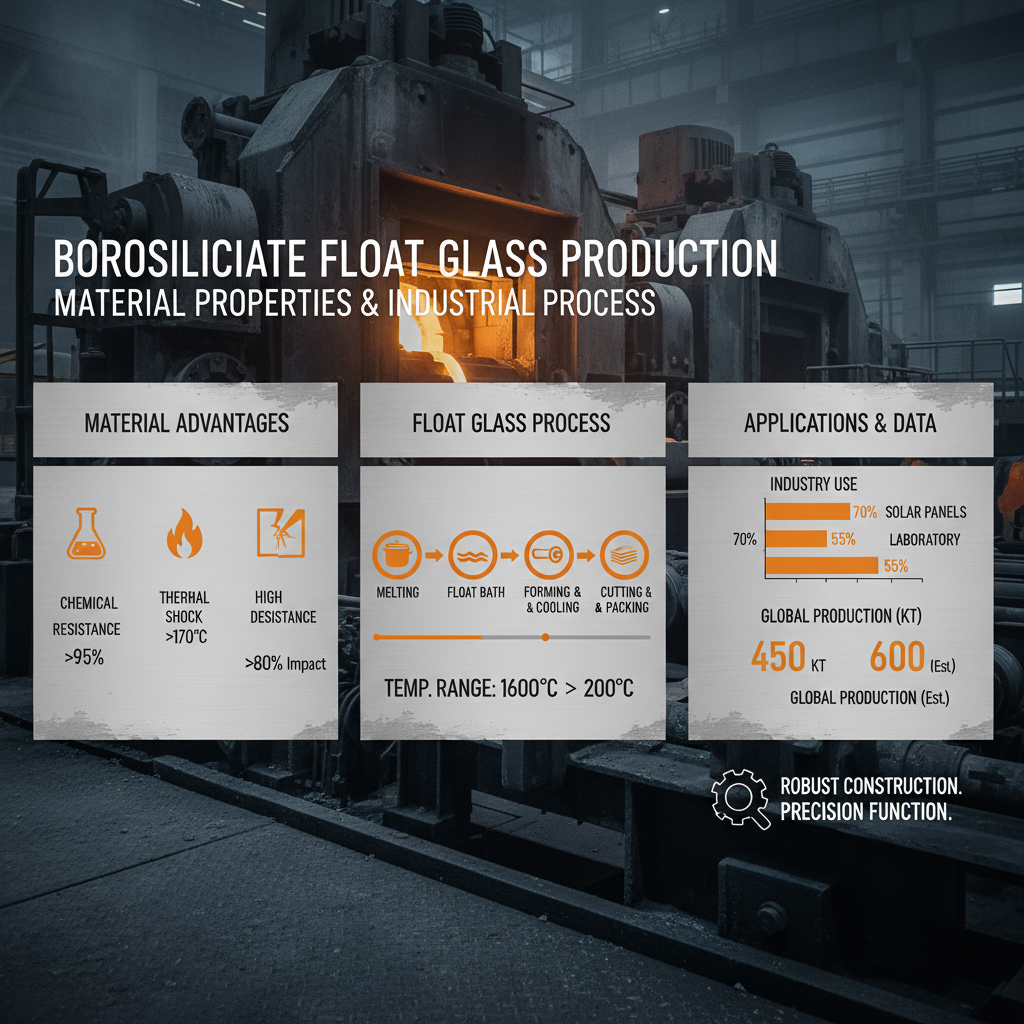
Borosilicate float glass, known for its exceptional thermal resistance, is a material gaining increasing prominence in various technological and industrial applications. Unlike traditional soda-lime glass, its composition incorporates boron trioxide, significantly lowering the coefficient of thermal expansion. This allows it to endure rapid temperature changes without shattering, making it a superior choice where thermal shock is a concern.
The float glass manufacturing process, combined with the unique borosilicate composition, results in a product with exceptional flatness, clarity, and uniformity. This specific combination of characteristics is critical for advanced applications requiring precise optical properties and dimensional stability.
Global Relevance and Industry Context
The global glass market is valued at hundreds of billions of dollars, with borosilicate glass representing a significant and growing segment. According to recent industry reports, the demand for specialty glasses, including borosilicate, is projected to increase by approximately 6-8% annually over the next decade. This growth is driven by expansion in pharmaceutical, chemical processing, and high-end consumer goods industries.
A major challenge facing many industries is the need for materials that can withstand harsh operating conditions and regulatory scrutiny. Borosilicate float glass addresses this need by providing a chemically inert and thermally stable solution. ISO standards related to material performance are becoming increasingly stringent, placing higher demands on glass compositions and manufacturing processes.
Furthermore, the geopolitical landscape influences the sourcing and production of key raw materials for borosilicate glass, such as boron minerals. Diversifying supply chains and investing in sustainable sourcing practices are becoming critical for ensuring long-term stability and resilience within the industry.
Defining Borosilicate Float Glass
Borosilicate float glass is a type of glass containing approximately 5-13% boron trioxide (B2O3). This boron content is the key differentiating factor, imparting exceptional thermal shock resistance compared to standard soda-lime glass. The "float" process involves pouring molten glass onto a bed of molten tin, creating a perfectly flat surface and exceptional optical quality.
Its unique composition isn’t merely about thermal resistance; it’s also remarkably resistant to chemical corrosion, making it ideal for laboratories, industrial processing, and pharmaceutical packaging. This inertness prevents contamination and ensures product integrity, crucial attributes in sensitive applications. borosilicate float glass is therefore often preferred over other glass types in these sectors.
The combination of the borosilicate composition and the float manufacturing process yields a material with superior strength, durability, and clarity. This makes it suitable for a wide range of applications where performance and reliability are paramount. Its application contributes significantly to modern industry and improves the reliability of many important processes.
Key Properties of Borosilicate Float Glass
The properties of borosilicate float glass stem directly from its unique composition. First and foremost is its exceptional thermal shock resistance – its ability to withstand rapid temperature fluctuations without cracking. This is quantified by a low coefficient of thermal expansion, meaning it expands and contracts minimally with temperature changes.
Furthermore, it boasts remarkable chemical resistance. It is virtually unaffected by acids, alkalis, and most organic solvents, making it invaluable in laboratory and industrial settings. This resistance is paired with high optical clarity, allowing for precise light transmission.
Borosilicate Float Glass Property Comparison
Applications Across Industries
The versatility of borosilicate float glass leads to its widespread use. In the pharmaceutical industry, it’s critical for vials and ampoules due to its chemical inertness, preventing contamination of sensitive medications. Laboratory glassware – beakers, flasks, test tubes – relies heavily on its thermal shock resistance for safe and accurate experimentation.
Beyond these, it's found in high-performance lighting, particularly halogen and high-intensity discharge (HID) lamps, where its ability to withstand high temperatures is essential. Its use is expanding in cookware, offering durable and heat-resistant alternatives to traditional materials, and in specialized applications like telescope mirrors requiring exceptional dimensional stability.
Advantages and Long-Term Value
The advantages of using borosilicate float glass extend beyond its technical capabilities. The long lifespan of products made from it translates to reduced replacement costs and minimized waste, offering significant economic benefits. Its inherent safety features—resistance to breakage and chemical leaching—enhance user protection.
From a sustainability perspective, its durability reduces the need for frequent replacements, lessening the environmental footprint. borosilicate float glass fosters trust and reliability in the products it's used within, building brand reputation and customer loyalty.
The long-term value derives from a combination of reduced lifecycle costs, enhanced safety, and minimized environmental impact, creating a compelling case for its adoption across numerous sectors.
Future Trends and Innovations
Ongoing research is focused on enhancing the properties of borosilicate float glass through novel compositions and manufacturing techniques. This includes exploring additives to further improve strength, optical performance, and scratch resistance. Advances in glass recycling technologies are also crucial for promoting a circular economy.
The integration of digital technologies, such as AI-powered quality control and automated manufacturing processes, is streamlining production and reducing defects. Furthermore, the demand for energy-efficient glass solutions is driving innovation in coatings and surface treatments, improving thermal insulation and reducing energy consumption.
Expect to see increasing use of borosilicate float glass in emerging technologies like advanced sensors, flexible displays, and sustainable energy applications, solidifying its position as a material of the future.
FAQS
Borosilicate float glass boasts significantly higher thermal shock resistance and chemical durability than soda-lime glass. Its lower coefficient of thermal expansion allows it to withstand rapid temperature changes without cracking, and its composition makes it largely inert to chemical corrosion. This makes it suitable for demanding applications where soda-lime glass would fail. Its higher cost is offset by its enhanced performance and longevity.
In laboratories, borosilicate float glass is commonly used for beakers, flasks, test tubes, graduated cylinders, and other glassware due to its resistance to chemical reactions and thermal shock. This ensures accurate results and minimizes the risk of contamination or breakage during experiments involving heating, mixing, or corrosive substances. Its clarity also enables precise observations.
The float process, where molten glass is poured onto a bed of molten tin, creates a perfectly flat and uniform surface with minimal imperfections. This precise flatness is crucial for optical applications, and the controlled cooling process minimizes internal stresses, increasing the glass's strength and durability. It results in a high-quality borosilicate float glass product with exceptional clarity.
Yes, borosilicate float glass is recyclable, but it often requires separate collection and processing from soda-lime glass due to differences in melting temperatures and compositions. Specialized recycling facilities are needed to ensure proper separation and reprocessing. Increasingly, companies are investing in advanced recycling technologies to improve the recovery rates and reduce the environmental impact.
Borosilicate float glass is typically more expensive than soda-lime glass due to the higher cost of raw materials, the more complex manufacturing process, and its specialized properties. However, the increased durability and performance often lead to lower lifecycle costs due to reduced replacement frequency. The specific price varies based on thickness, size, and quantity.
Industries benefiting most include pharmaceuticals (vials, ampoules), laboratories (glassware), chemical processing (resistant equipment), lighting (high-intensity lamps), cookware (durable bakeware), and specialized manufacturing (optical components, telescope mirrors). Any application requiring thermal shock resistance, chemical inertness, and high optical clarity will benefit from borosilicate float glass.
Conclusion
Borosilicate float glass stands as a remarkable material, offering a unique combination of properties that address critical needs across diverse industries. Its exceptional thermal shock resistance, chemical durability, and optical clarity make it a superior choice in demanding applications where performance and safety are paramount. Its value extends beyond technical capabilities, contributing to sustainability, cost-effectiveness, and enhanced product reliability.
Looking ahead, continued innovation in materials science and manufacturing processes promises to further unlock the potential of borosilicate float glass. Investing in research and development, coupled with a commitment to sustainable practices, will be crucial for maximizing its benefits and addressing emerging challenges. To learn more about our range of borosilicate float glass products and their applications, visit our website: www.wangmeiglass.com